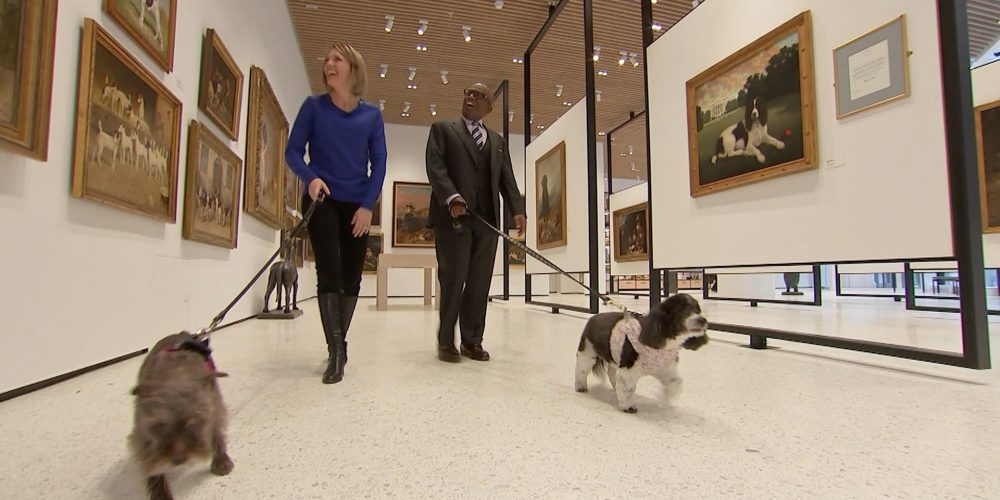
Have you ever wondered why we treat our pets with as much love and tenderness as our family members
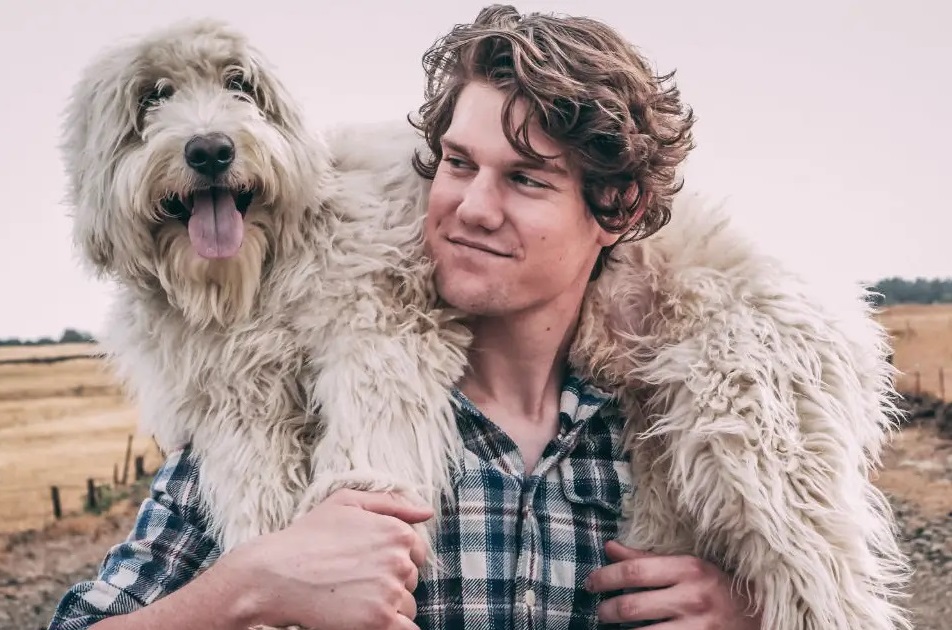
It’s really touching to see with what tenderness and care many people treat their pet, like their own child.
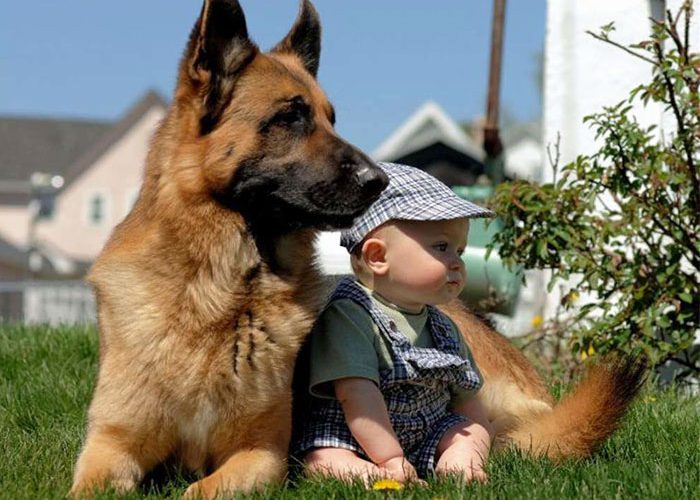
Scientists say it is scientifically proved that there is a good reason why so many people feel as attached to their pets as they do to their human children—over the course of evolution, dogs, for example, have hijacked the human bonding pathway that ensures we protect our young.
Research shows that our brains essentially respond in the same way to pet dogs as they do to human children. Our brains weren’t always wired this way, but as we domesticated dogs, they developed human-like social and cognitive abilities. They started to act and even look like babies—and our brains began to perceive them as such.
That’s why Zachary Silver, director of the Canine Cognition Lab at Occidental College, isn’t at all surprised people feel so strongly about their four-legged friends—in fact, to him, it would be odd if they didn’t. “The dogs of today have been carefully selected over thousands of years to be kind, affectionate, and carefully attuned to us,” he says.
So, if you’ve ever been teased for treating your dog like your actual human child, just know there are 20,000 to 40,000 years of evolution causing you to behave this way. Here’s how this powerful neurobiological response makes us love, trust, and nurture our pups.
Our brain really does view our dog as a child
Alison LaCoss, a mother of three, says the moment she gave birth to her kids, she felt an overwhelming desire to love them and keep them safe. A similar phenomenon occurred when she adopted Shio, a one-year-old Great Pyrenees, and Babka, a standard puppy. “I felt a flood of emotions. Here were these cute, adorable creatures that I suddenly wanted to love and protect,” she says. “I felt like they were my babies.”
LaCoss’s behavior isn’t an anomaly—and a brain imaging study conducted in 2014 provides some important clues as to why. To figure out what causes people to feel so intensely about their dogs, researchers from Harvard University recruited a group of mothers who had at least one child between the ages of two to 10 and a dog they had owned for at least two years. The moms went into MRI machines and looked at various images of dogs and kids—some their own, and some not.
The researchers found significant overlap between the emotional experience of the mother-child relationship and the mother-dog relationship. The amygdala, a brain area that drives bond formation and reward, lit up when the women looked at pictures of their child and their dog.
“The brain areas related to attachment, love, and bonding were stimulated in a similar way,” says Niwako Ogata, an associate professor of animal behavior at the Purdue University College of Veterinary Medicine who studies the human-dog bond. The women also reported similar levels of pleasantness and excitement when they looked at photos of their kids and dogs. The findings “reveal there must be a special connection toward our own dog,” adds Ogata.
There were some key distinctions—certain parts of the midbrain, which are also related to reward, were more active when the mothers looked at photos of their human children compared to their dogs. So while there appeared to be strong connection, love, and attachment between mothers and their dogs, the brain still recognized they’re a different species, says Ogata.
LaCoss says she does feel distinctly proud watching her human kids grow and develop. “There’s this huge reward in witnessing your kid achieve something. Dogs don’t accomplish things to the same degree,” she says. But that doesn’t mean she loves Shio and Babka less—in fact, she feels the same intense desire to take care of all their needs.
“Dogs, pretty much across the board, will deliver that same neurological response human children do,” Silver says. This fact suggests something very profound—“that the relationship we have with our dogs has almost crossed into the territory of being as important to us as a biological relative.”
Dogs and babies activate the release of the same chemicals in your body
Equally compelling are the feel-good neurotransmitters the brain pumps out when we spend time with our dogs.
When we look into the eyes or cuddle with a person we care for—whether it be a child, or close friend—our bodies produce oxytocin, a hormone responsible for attachment, affection, and connectedness. Oxytocin plays an important role in bonding parents and infants—for example, when a parent holds their newborn, oxytocin levels rise, encouraging them to repeat these behaviors, which leads to even more oxytocin and so on, says Silver.
A similar phenomenon occurs with dogs, says Silver. Multiple studies have found that both humans and dogs experience a surge in oxytocin while gazing at, playing, talking, and snuggling with one another. So we repeat these actions that continuously feed us more oxytocin, tightening our connection.
As one paper states, dogs have hijacked the human bonding pathway. When your dog gazes up at you with puppy dog eyes or trots over when you call their name, your body releases oxytocin, which turns on the caregiving system—a biological response that ensures we protect our young—and makes you want to take care of their needs, explains Ogata.
LaCoss can relate—she nurtures Shio and Babka as she would a human child. She pays for monthly grooming, BarkBox subscriptions, and health insurance. She lets them sleep wherever they want in the house (beds included). She takes Shio and Babka on family vacations, but on the rare occasions they don’t join, the pups stay at a boarding facility equipped with an in-suite television. She bought a house specifically for its fenced-in yard. “I am completely overcome with emotional attachment to these animals,” she says.
Dogs have traits that make us love them like children
The adoration we feel for our dogs can be traced back to their domestication, says Federico Rossano, director of the Comparative Cognition Lab at University of California San Diego. From the start, humans chose dogs that had easygoing, cooperative temperaments. We rewarded ones that paid close attention to our eyes and faces for visual cues and behavioral guidance.
We also favored traits that made them appear more human-like. Unlike their predecessors who had long snouts and sharp skulls, modern dogs have round heads, big eyes, and puffy cheeks, Rossano says. They also have a muscle near their inner eyebrows that lets them make facial expressions that resemble human sadness, curiosity, joy.
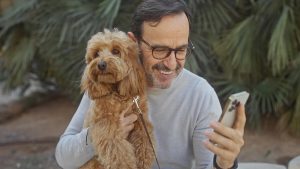
“Humans are visually oriented,” says Ogata, “so visual stimuli like facial expressions elicit a strong emotional reaction.” As another brain imaging study found, our brains also react to dog and human facial expressions similarly.
In other words, dogs are very cute—like babies, at least according to our brains, says Rossano. They also play like kids—chasing balls and carrying stuffed animals around the house—and think like toddlers. After all, they have the cognitive abilities of two to three-year-olds, Rossano says. And, as one study suggests, many people view dogs as vulnerable creatures that, like human babies, are unable to fully protect themselves.
If you are a pet parent, you don’t need a brain scan or blood test to prove that the dog-human bond is analogous to the parent-child bond—though, that certainly adds to the argument.
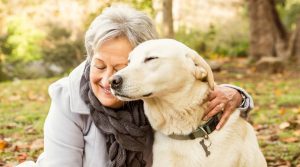
LaCoss says that even though Shio and Babka don’t talk to her and will never graduate from middle school, she would do anything to keep them fed, safe, and happy. They’re family members she feels fully responsible for, she says. “My home isn’t home without them.”
By Alex Arlander | ENC News