Climatic rainfall reshapes entire river ecosystems, prove ecologists from the Virginia Institute of Marine Science
Rainfall has an outsized impact on the ecology of rivers, according to a new study led by William & Mary’s VIMS & Batten School and published in the journal Ecology. The study reveals how differences in rainfall reshape river ecosystems, altering food webs, animal productivity, and the balance of freshwater life.
Climate change gets talked about mostly in degrees – how much warmer things will get, how many more heatwaves, how far the glaciers will retreat. But temperature is only part of the story.
In many parts of the world, what will change just as dramatically is how much it rains. And according to a new study of Texas rivers, that shift could restructure the very foundations of freshwater life.
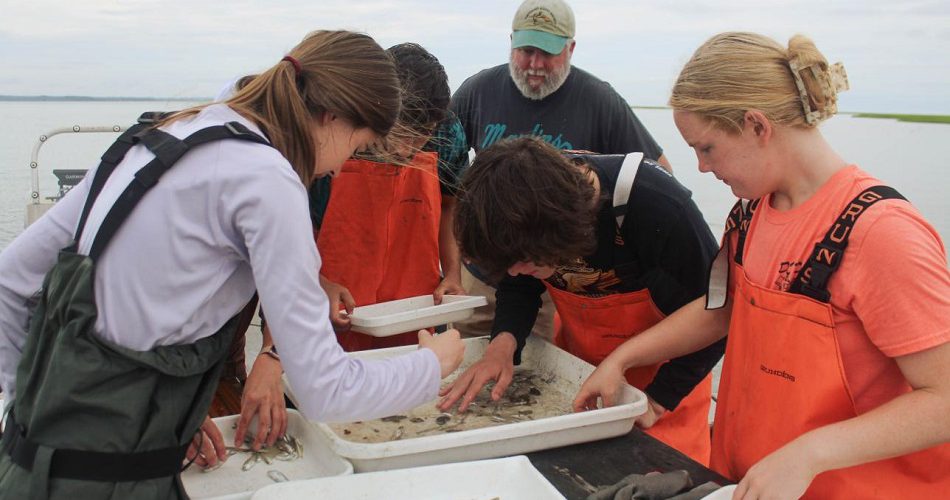
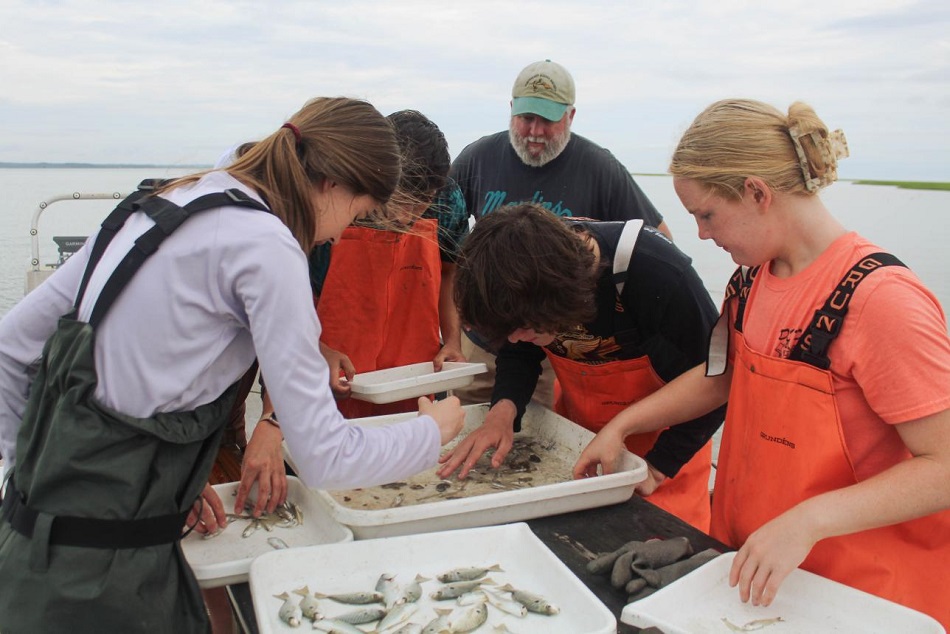
The research was led by Bradley Strickland from the Virginia Institute of Marine Science (VIMS). It is one of the most comprehensive studies of freshwater ecosystem productivity ever conducted. The scientists tracked both fish and invertebrate communities across nine rivers over three years.
A natural laboratory in South Texas
The study site is a quirk of geography. In the Gulf Coast prairie ecoregion of Texas, dry air from the Chihuahuan Desert to the west collides with moisture from the Gulf of Mexico to the east.
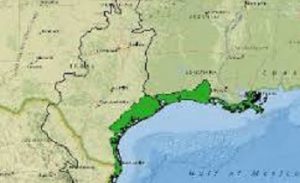
The result is a steep rainfall gradient. Annual precipitation swings from around 55 to 135 centimeters over a relatively short stretch of land.
“Anywhere else in the U.S., if you had a rainfall gradient like that, it would usually be because of some geologic feature, like a mountain range,” said co-author Chris Patrick, an associate professor at VIMS.

“So you’re not sure what’s causing what. In South Texas, the only thing that’s really changing is the rainfall.”
“That makes it a nice natural laboratory. And it’s unique, there’s no other place in the continental U.S. like it. There may be very few other places like it in the world.”
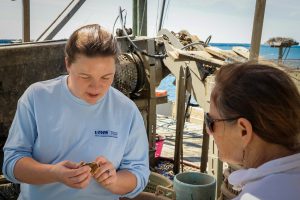
Over three years, Patrick’s team sampled fish, snails, algae, and other organisms across nine streams spaced along that gradient. They measured water quality, temperature, and dissolved oxygen.

The metric that actually matters
Most ecological surveys count species, or measure biomass, or note abundance. All are useful, but none of them fully captures how an ecosystem is actually functioning. They largely ignore how energy is flowing through it, and how fast animals are growing, dying, and being replaced. For that, you need secondary production: the rate at which new animal tissue is built across an entire community.
“Secondary production is truly one of the best measures we have for understanding the function of an ecosystem, because it integrates so many other measures of efficiency, ecological structure, population dynamics and community structure,” Strickland said. Measuring secondary production empirically, for a single species, is already rare. Doing it for entire invertebrate and fish communities simultaneously had never been done before.
The pyramid flips
When the team analyzed their data, one pattern was clear: the drier the stream, the higher its secondary production. Less rainfall means less tree cover, more sunlight reaching the water, and more algae. Streams in the drier half of the gradient had twice the secondary production of their wetter counterparts.
But it was the shape of that productivity that caught the researchers off guard.
In aquatic ecosystems, the biomass pyramid is usually inverted: large, long-lived predators accumulate biomass at the top.
The algae and phytoplankton at the bottom cycle through so rapidly they never have a chance to stack up. This is how many aquatic food webs work, particularly in the ocean.
In the drier Texas streams, the pyramid flipped the other way – bottom-heavy, more like a terrestrial grassland.
A food web built for speed
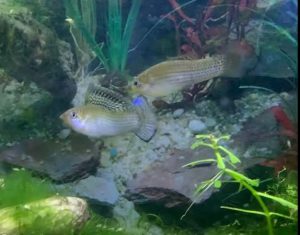
Rapidly reproducing herbivores like sailfin mollies dominated in Texas. Female mollies reach sexual maturity in just 32 days, so their populations boom on the abundant algae.
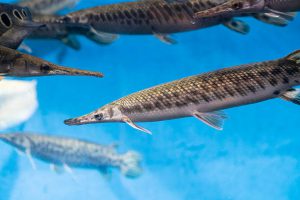
Predatory fish like spotted gar sit at the top, but in relatively small numbers, sustained by a fast-churning base of prey below.
“That tells us the whole energy pathway has changed across this rainfall gradient,” Strickland explained.
“Rainfall changes the amount and type of resources at the base of the food web, and our findings point to consumers responding dramatically.”
A slower, steadier world
At the wetter end of the gradient, things look different – and in some ways, more familiar. Trees shade the water, algae is scarce, and the ecosystem runs on detritus: fallen leaves, animal carcasses, organic debris.
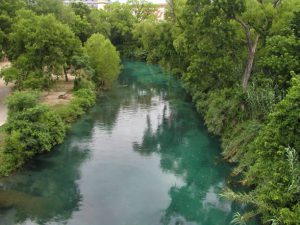
Invertebrates called detritivores do much of the work, breaking this material down and feeding it back into the food web. The pace of life is slower and the food web is more complex, with more animal production concentrated at higher levels. “It’s a slower, steadier way of living compared to the stressful, fast way of life seen in drier streams,” Strickland said.
Rain as a master variable
The study’s key conclusion is that rainfall functions as a master variable for river ecosystems.
This is a single climatic factor that can reorganize productivity, food web structure, and the distribution of life from the bottom of the water to the top.
That finding carries weight beyond South Texas. The researchers draw parallels to grasslands, coastal systems, and marine environments.
As climate change makes rainfall more variable, and as dry zones expand across the American Southwest and elsewhere, the kinds of shifts documented in this study may play out far more widely.
“There are some places where deserts will expand, others where it’s going to get wetter on average year-round. Rainfall is another important mechanism through which climate change is going to alter ecosystems,” Patrick concluded.
By Gilbert Castro | ENC News