Why do Americans prefer life in the suburbs to life in urban or rural areas?

About 60 million Americans live in the nation’s rural counties now. 175 million Americans live in the suburbs and small metros. And about 98 million Americans live in the urban core counties.
Suburbs are growing more rapidly than rural or urban areas, according to numerous studies on demographic and economic trends in urban, suburban and rural communities in the U.S.
In 2010, suburbanites outnumbered city and rural dwellers combined for the first time. “We Americans live in a suburban nation,” says Christopher Boone, Dean of the Sol Price School of Public Policy at the University of Southern California.
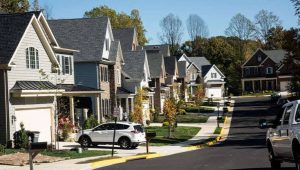
Since 1970, more Americans have lived in the suburbs than central cities.
Despite several concerted efforts by city governments to lure residents, suburbanization continues largely unabated. Census figures from 2020 show that suburbs of warm climate “Sun Belt” cities in the South and West continue to grow, while cities in the cold climate “Snow Belt” of the Midwest and Northeast decline.
Smaller metropolitan areas with fewer than 500,000 people have also grown, related to an improving economy and job creation in smaller urban centers. This ongoing shift towards the suburbs has significant environmental repercussions.
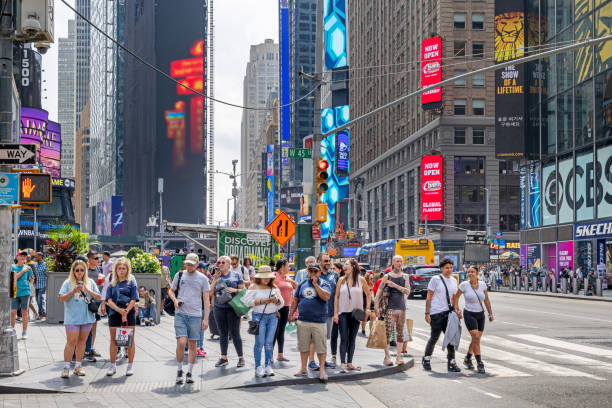
Since cities and suburbs are home for 8 of every 10 Americans, views of the country are often distorted. Most travel occurs within or between cities. Although rural areas have more than three times the miles of roadways as urban areas, more than two-thirds of the 3 trillion miles that vehicles travel each year in the U.S. are in urban and suburban areas.
Jobs, too, are overwhelmingly centered around cities. Less than 2 percent of the American labor force is employed in agriculture.
Many people are surprised that the land area occupied by cities is only 3 percent of the nation’s territory. However, cities have an outsized impact on the economy. In 2025, metropolitan areas are estimated to contribute roughly US$29 trillion dollars to the nation’s gross domestic product, more than 90 percent of the country’s economy.
With this economic activity comes a high use of natural resources and concentrated pollution production.
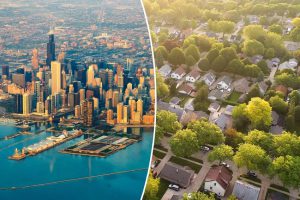
Although density can be more efficient when it comes to energy use, the sheer number of urban dwellers means that cities, despite a small physical footprint, have a big energy and pollution footprint.
Rising suburbanization undermines some of the energy efficiency gained by high density living in urban cores. Manhattan has lower per capita greenhouse gas emissions than the suburbs of New York, thanks to factors like apartment living, high costs of car ownership and extensive public transit. But not everyone can afford to live in Manhattan even if they want to.
Low-density suburbs are an affordable alternative to expensive urban housing.
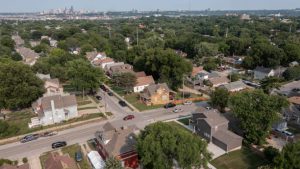
However, for some categories of the population suburban life can look less desirable. As the U.S. population ages, elderly people may end up “stranded in the suburbs,” far from adequate public transit and unable or unwilling to drive. “At the Arizona University, where I previously worked, a mixed use retirement facility was sold out before ground was broken,” says Christopher Boone. In the U.S., there are more than 100 university-based retirement communities and the number is growing.

Several decades ago, a number of analytics thought that the trend toward suburban life could soon come to an end. They believed that millennials – the generation born between 1981 and 1997 – appear to prefer urban life. They are happier in cities, especially large metropolitan areas, than older generations. The millennial population is growing fastest in metro areas in the Sun Belt and western states, and slowest in the Snow Belt. Topping the list of the fastest-growing metropolitan areas for millennials are Colorado Springs, San Antonio, Denver and Orlando.
But these predictions didn’t come true. According to the Harvard Joint Center for Housing Studies, throughout the past decade millennials have been moving to suburbs that are farther out from the city center. They find in the suburbs affordable housing.

Two-thirds of millennials and Gen Zers who moved back home during COVID still remain there.
However, it seems unlikely that people will start to move out of cities and suburbs and back into rural areas. Even though increased connectivity and the internet of things will make remote work more possible than before, businesses will continue to concentrate in urban cores, because they profit from being close to one another.
“I believe that it’s likely the U.S. will remain a nation of suburbs for some time to come,” says Christopher Boone. That will pose a continuing environmental challenge. But it will also bring a new set of opportunities for millennials and Gen Zers, who are the largest generations in the country now.
Currently, there are approximately 74 million millennials and 71 million Gen Zers in the USA now. How will the generations of millennials and Gen Zers remake the suburbs to suit their needs and desires without exacerbating current environmental challenges?

The answer to this question has profound implications for the nature of cities and urban life in the U.S.
By Alex Arlander | ENC News